Language and Accept-language: How AI-Assisted Workflows Can Stay Stable
language and Accept-Language is useful when API users and automation teams that run repeated account-related workflows need to solve this problem: automated tasks can use the wrong profile, proxy route or permission set when the environment is not clearly assigned. The first check is simple: bind each task to a specific profile, proxy region, permission level and pause condition.
Search Intent and Fit
People searching for language and Accept-Language usually want to know whether it can reduce account-environment risk, support a real team workflow, or clarify a configuration decision. The answer depends on account value, proxy consistency, profile ownership and review records.
- Good fit: recurring account operations, team access, cross-region work, API-assisted workflows or long-term account assets.
- Not a good fit: one-off browsing tasks with no account value, no team access and no need for repeatable records.
- First action: bind each task to a specific profile, proxy region, permission level and pause condition.
- Limit: it does not replace manual review, platform policy checks or an emergency stop process.
AI Workflow Angle
If AI-assisted tools help with support, publishing, data review or repetitive operations, the browser profile still needs clear ownership and stable identity settings.
Setup Checks
- Confirm which account or workflow the browser profile supports.
- Keep proxy region, time zone, language and account details aligned.
- Separate profile access by operator role and task responsibility.
- Document setup choices so abnormal activity can be reviewed later.
Workflow Context
The source question points to an operational decision, not just a feature definition: Browser language is the language displayed in this browser interface. If you enter zh-CN, the browser will be displayed as a Chinese font, and the input en-GB is the British English font displayed. Accept-Language is a property in an HTTP request, used to tell the server what language the browser can support.
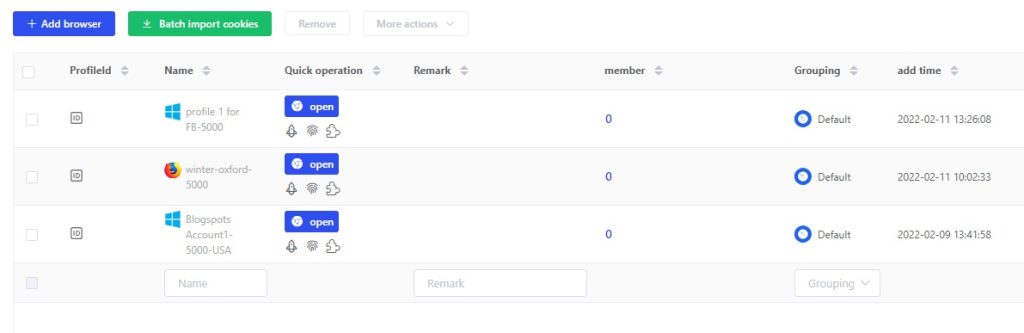
Lalicat Antidetect Browser helps teams keep profile management repeatable instead of relying on one-off browser sessions. A profile should carry its own fingerprint settings, cookies, storage, proxy logic and operator permissions.

Evaluation Criteria
| Criterion | What To Check | Why It Matters |
|---|---|---|
| Profile isolation | Keep cookies, cache, local storage and fingerprint settings separate | Reduces account environment pollution |
| Proxy consistency | Match IP region, time zone, language and account location | Keeps daily access patterns easier to review |
| Team permissions | Assign browser profile access by role and task | Prevents accidental logins and unclear responsibility |
| Review records | Keep profile, proxy and operating notes together | Makes abnormal events easier to investigate |
Use Cases
- Teams that need stable browser profiles for marketplace, social, advertising or support accounts.
- Operators who need to separate proxy settings, cookies, local storage and fingerprint parameters by account.
- Managers who need permission control, profile grouping and clearer troubleshooting records.
- API or automation users who need predictable setup steps before scaling repetitive workflows.
Service Scope and Limits
Lalicat can help organize browser profiles, permissions, proxy matching and account operating records. It should not be treated as a promise to bypass platform rules. Teams still need to follow marketplace policies, advertising rules, privacy regulations and local laws.
FAQ
Who should pay attention to language and Accept-Language?
Teams should pay attention when the workflow affects account access, browser profile stability, proxy matching or repeated operations. The higher the account value, the more important a clear profile process becomes.
Does Lalicat replace platform compliance requirements?
No. Lalicat helps organize browser environments and team workflows, but teams still need to follow marketplace policies, advertising rules, privacy requirements and local laws.
How can a team check whether the setup is ready?
A setup is ready when account details, proxy region, browser fingerprint, team permissions and operating records all support the same workflow. If one part is unclear, fix it before adding more accounts.
Action Plan
Map a small set of important profiles, document proxy and fingerprint settings, assign operator permissions, and expand the workflow only after the setup stays stable in daily use.
get free trial
We Offer 3-Day Free Trial for All New Users
No Limitations in Features